
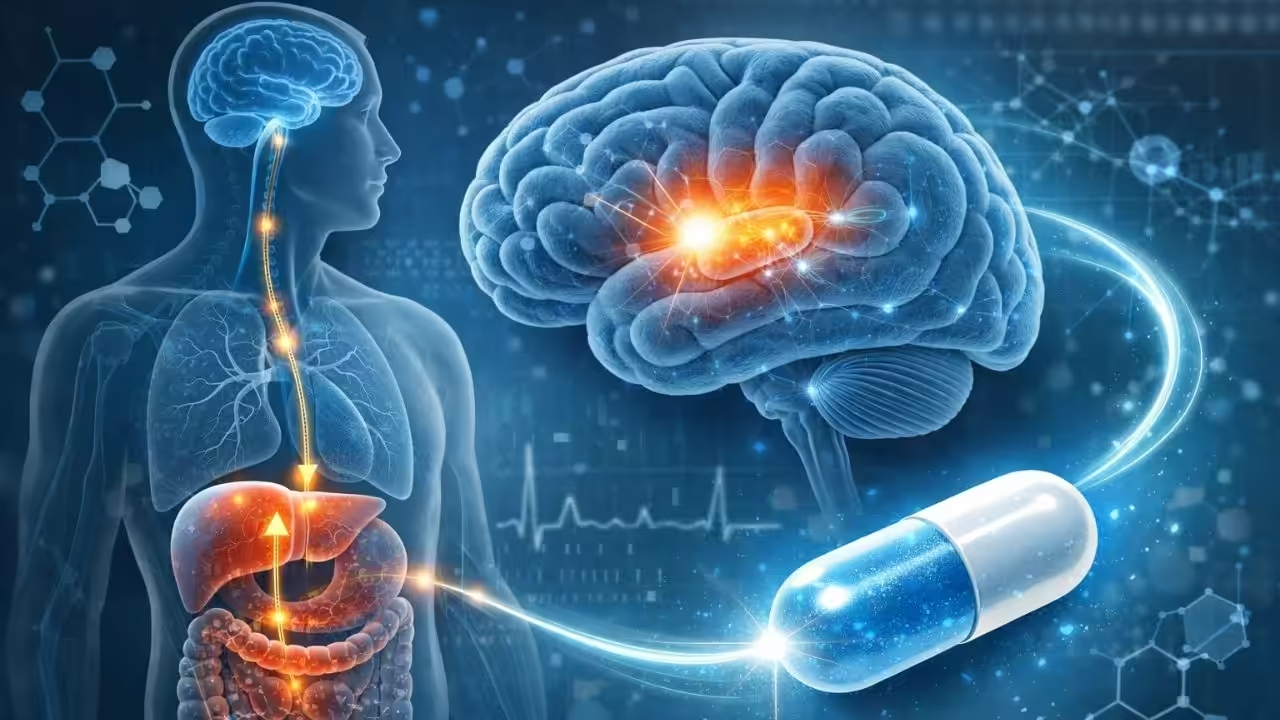
For more than 60 years, metformin has been widely used as a first-line treatment for type 2 diabetes. It is considered safe, affordable, and effective, helping millions of people manage blood sugar levels. For decades, its action was mainly linked to organs like the liver and digestive system.
Recent scientific findings have changed this long-standing understanding. Researchers have discovered that metformin also works directly in the brain, influencing how the body regulates glucose. This new insight shows that the drug’s effects are more complex than previously believed.
The discovery is important because it opens new directions in diabetes research. By understanding how the brain is involved, scientists may develop better treatments not only for diabetes but also for other metabolic and neurological conditions.
Table of Contents
Understanding Metformin: A Long-Used Diabetes Medicine
Metformin belongs to a class of medicines known as biguanides and is one of the most commonly prescribed drugs for type 2 diabetes worldwide. It is usually recommended as a first treatment option because of its effectiveness and relatively low cost.
Traditionally, metformin was believed to lower blood sugar mainly by reducing glucose production in the liver. It also improves insulin sensitivity, which allows the body to use glucose more efficiently. These actions help control high blood sugar levels, a key problem in diabetes.
Over time, researchers found that metformin also affects the gut, influencing hormones and metabolic signals that help regulate glucose. However, even after decades of use, scientists continued to study the drug because its complete mechanism was not fully understood.
This incomplete understanding led scientists to explore whether other parts of the body, especially the brain, could play a role in how metformin works.
The New Discovery: A Direct Link Between Metformin and the Brain
A recent study published in Science Advances has revealed that metformin directly affects the brain. Researchers found that the drug reaches a specific brain region called the ventromedial hypothalamus (VMH), which plays a key role in controlling metabolism and blood sugar levels.
The brain is known to regulate many body functions, including appetite, energy balance, and glucose control. Because of this, scientists investigated whether metformin could influence these processes through the brain.
The findings showed that metformin interacts with the brain even at low concentrations. In fact, the brain responds to much smaller doses of the drug compared to organs like the liver or intestines.
This discovery challenges the earlier belief that metformin works mainly through peripheral organs. Instead, it shows that the central nervous system is also an important part of its mechanism.
The Role of Rap1 Protein in Blood Sugar Control
One of the most important parts of this discovery is the role of a protein called Rap1. This protein is found in the hypothalamus and plays a role in regulating glucose metabolism.
Scientists found that metformin lowers blood sugar by turning off or inhibiting Rap1 in the brain. When Rap1 activity is reduced, the body is better able to control glucose levels.
To test this, researchers used genetically modified mice that did not have Rap1 in their brain. In these animals, metformin failed to reduce blood sugar levels, even though other diabetes drugs continued to work normally.
This result provided strong evidence that Rap1 is essential for metformin’s effect. Without this protein pathway, the drug cannot perform its glucose-lowering function effectively.
Further experiments showed that increasing Rap1 activity in the brain can raise blood sugar levels and block metformin’s effect. On the other hand, reducing Rap1 activity improves glucose control.
These findings highlight the importance of the brain in managing diabetes and explain how metformin works at a deeper level.
How the Hypothalamus Regulates Glucose Levels
The hypothalamus is a small but important part of the brain that acts as a control center for metabolism. It sends signals to different organs, helping regulate hunger, energy use, and blood sugar levels.
Within the hypothalamus, a specific area called the ventromedial hypothalamus (VMH) is especially important for glucose regulation. Researchers found that metformin activates certain neurons in this region, known as SF1 neurons.
When these neurons are activated, they help the body maintain proper glucose balance. Metformin appears to enhance this process by influencing the activity of these brain cells.
Experiments showed that even very small doses of metformin delivered directly to the brain could lower blood sugar in animals. This suggests that the brain pathway is highly sensitive and effective.
Overall, this mechanism shows that blood sugar control is not limited to organs like the liver. Instead, it involves communication between the brain and the rest of the body.
Key Findings From the Study
The recent research provided several important insights into how metformin works. The following points summarize the main findings:
- Metformin reaches the brain and acts in the ventromedial hypothalamus
- The drug lowers blood sugar by inhibiting the Rap1 protein
- Brain neurons known as SF1 neurons play a role in its effect
- Without Rap1, metformin loses its ability to control glucose
- The brain responds to much lower drug concentrations than other organs
These findings show that the brain is a central player in diabetes treatment and that metformin’s effects are more complex than previously thought.
Comparison of Traditional vs New Understanding
The discovery of metformin’s brain pathway changes how scientists view the drug. The table below shows the difference between earlier understanding and current findings:
| Aspect | Traditional View | New Understanding |
|---|---|---|
| Main target | Liver and gut | Brain, liver, and gut |
| Mechanism | Reduce glucose production | Inhibit Rap1 in brain neurons |
| Drug sensitivity | High doses needed in organs | Brain responds to low doses |
| Key regulator | AMPK pathway | Brain Rap1 pathway |
| Treatment focus | Peripheral organs | Brain–body interaction |
This comparison shows that metformin works through multiple systems, with the brain playing a much more important role than previously recognized.
Why This Discovery Matters for Medical Science
The discovery that metformin acts in the brain is significant for several reasons. First, it provides a clearer understanding of how the drug works, which has remained partly unclear for decades.
Second, it highlights the importance of the brain in controlling metabolic diseases like diabetes. This could change how scientists approach treatment, focusing more on brain pathways instead of only targeting organs like the liver.
Third, the research suggests that other diabetes drugs may also work through similar brain mechanisms. This could lead to new types of treatments that are more precise and effective.
Finally, the findings may help explain why metformin has additional benefits beyond glucose control, such as effects on appetite and metabolism.
Possible Future Applications and Research Directions
The discovery of a brain-based mechanism for metformin opens several new areas of research. Scientists are now interested in exploring whether this pathway can be targeted to improve treatment outcomes.
Future research may focus on developing drugs that directly target the Rap1 pathway in the brain. This could lead to more effective therapies with fewer side effects.
There is also growing interest in studying how metformin affects brain health. Some studies suggest it may have benefits related to aging and neurological function, although more research is needed to confirm these effects.
Another important area is human research. Most of the current findings come from animal studies, so scientists need to confirm whether the same mechanisms apply in humans.
Overall, this discovery provides a new direction for both diabetes treatment and brain-related research.
Limitations of the Current Findings
While the results are promising, there are some limitations that need to be considered. The most important limitation is that much of the research has been conducted on animals, especially mice.
Human biology can be more complex, and the same effects may not fully apply in people. Therefore, further clinical studies are necessary to confirm these findings.
Another limitation is that metformin works through multiple pathways. While the brain mechanism is important, it does not replace the roles of the liver and gut. Instead, it adds another layer to the drug’s overall effect.
Researchers also need to study long-term effects and safety when targeting brain pathways, as this could influence other functions controlled by the hypothalamus.